What is Local Exhaust Ventilation?
In many industrial and laboratory environments, controlling exposure to hazardous fumes and airborne contaminants is essential. It is a legal requirement to adhere to COSHH regulations. That’s where Local Exhaust Ventilation (LEV) comes in. But what does local exhaust ventilation mean? And why is it so important? In this blog, we’ll explore how LEV systems work, when they should be used, and the importance of regular local exhaust ventilation testing.
What does local exhaust ventilation mean?
Local exhaust ventilation refers to a system designed to remove airborne contaminants at their source before they can spread into the workplace environment. Unlike general ventilation, which circulates air throughout a room, LEV systems target specific areas, like workbenches or machinery where harmful substances are released.
By capturing fumes, vapours, and dust directly from the source, LEV systems play a key role in protecting your employee’s health and improving air quality in enclosed spaces. You can read more about the difference between LEV and general ventilation in this guide.
When should local exhaust ventilation be used?
LEV systems are essential in any environment where hazardous airborne substances are released as a biproduct of a specific process. Some examples include:
- Soldering stations in electronics manufacturing
- Laboratory fume cupboards
- Laser cutting, welding, and grinding applications
- 3D printing or additive manufacturing processes
- Chemical handling or mixing stations
Essentially, if there’s a risk of exposure to harmful airborne substances, an LEV system should be in operation. Regular servicing and annual testing is also important to ensure your system remains compliant with COSHH (Control of Substances Hazardous to Health) regulations throughout the year.
At Purex, we provide a wide range of clean air systems tailored to a wide range of different industries. Whether you need a compact unit for a small lab or a powerful multi-user system for a large workshop, we’ve got you covered.
Why Local Exhaust Ventilation testing matters
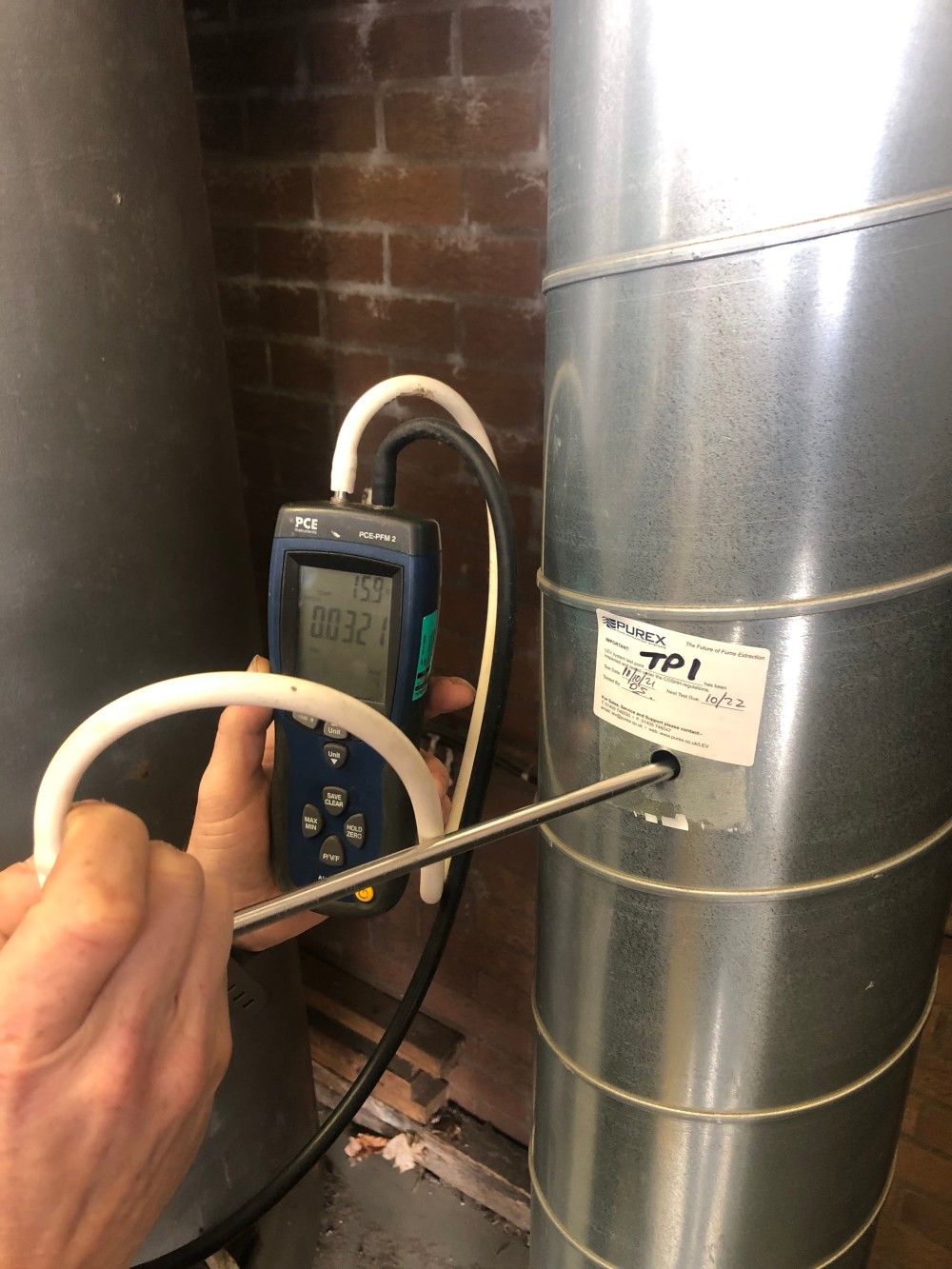
Once an LEV system is installed, it’s not a case of “set it and forget it”. Over time, filters can clog, airflow can drop, and ductwork can become damaged which can reduce performance and put workers at risk. Therefore, regular local exhaust ventilation testing is essential to ensure the system continues to work efficiently and you’re in adherence with COSHH regulations.
In the UK, all LEV systems must be tested at least once every 14 months. During the test an engineer will thoroughly examine your system to identify any issues before providing you with a comprehensive report and certificate indicating whether your LEV system is safe to use.
Already have an LEV system? Book your LEV Test here.
Choosing the right LEV system
Choosing the right local exhaust ventilation system for your business will depend on your specific processes and workspace. Purex offers a full range of clean air systems, including:
- Essential Collection – Ideal for low-volume applications
- Lite Collection – Compact yet powerful units for medium-capacity use
- Core Collection – Versatile systems offering a balance of power and portability
- Plus Collection - Offering system with airflow capabilities from 1500-2000 m3/h
- Enterprise Collection – High-capacity systems for demanding industrial environments
Each system is designed to meet industry-specific requirements and ensure safe, compliant fume extraction. Explore each range to find the best system for your operations.
Why LEV systems are essential
Understanding what local exhaust ventilation is and why it matters is the first step in maintaining a healthy, compliant work environment. Whether you're soldering, handling chemicals, or using laser equipment, LEV systems help reduce exposure to harmful substances.
At Purex, we’re here to support your company’s needs with expertly engineered local exhaust ventilation systems and services. Explore our full product collection or get in touch with our team to find the right solution for your business.
Latest insights
-
What Is MEK? Workplace Risks and Safety Tips
Methyl ethyl ketone (MEK) is a widely used industrial solvent found in many manufacturing processes. While it plays an important role in industries ra... Read more -
How to Tell If Your Workplace Air Is Making Staff Ill
Most workplace hazards are easy to spot. A wet floor, exposed machinery or trailing cables all present obvious risks. Airborne contaminants are... Read more -
How to Reduce Solvent Exposure Risks in the Workplace
If you've ever wondered what a solvent is, how exposure can affect workers, or what steps businesses can take to reduce risks, this guide covers every... Read more
How Purex can help
We provide an excellent level of service and support, including our 24-hour technical support service and start-to-end projects. Get in touch with our expert team today to find out more.