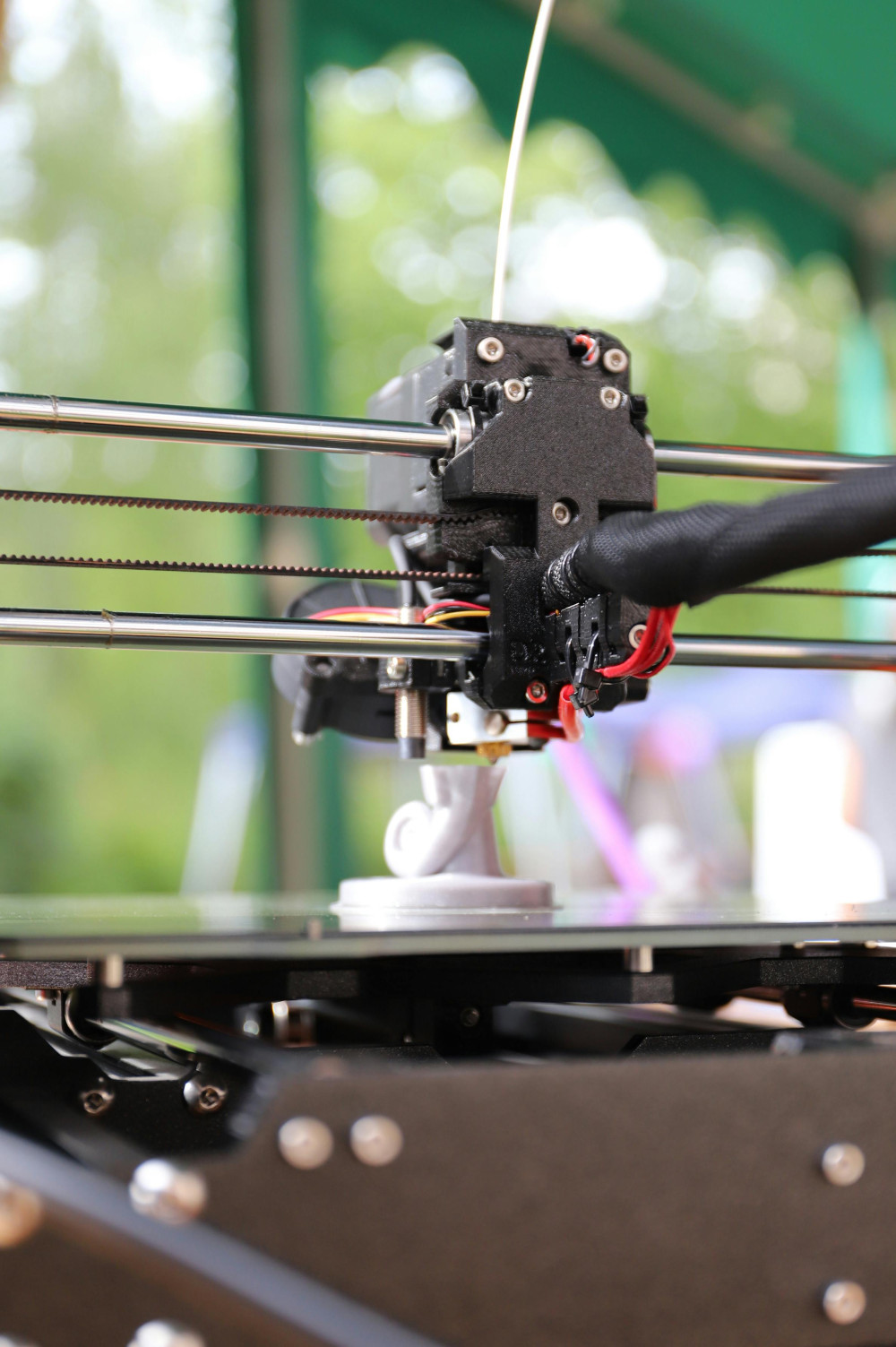
Printing Fume Extraction
Our fume extraction systems are engineered to effectively remove fumes generated during industrial printing and manufacturing processes. Ideal for print rooms, production facilities, laboratories, and workshops, Purex solutions help support safer, cleaner environments across a wide range of chemical-based applications.
Our clean air machines are designed to extract harmful fumes and solvents produced in various industrial printing processes. Whether printing directly to film or using UV technology, air quality plays a vital role in maintaining the safety of your team and the quality of your product. So, trust Purex to provide lasting clean air solutions. Pairing our advanced filtration technology with our team of P601 and P602 accredited engineers helps keep your business compliant with COSHH regulations long after your initial installation, reliably supporting your printing processes for years to come.
Typical Applications
Continuous Inkjet Printing
Continuous Inkjet Printing (CIJ) is an industrial printing process that uses electricity to charge ink droplets and direct them onto a product. Often used to print dates, logos, and barcodes in fast-moving production lines, the inks used in CIJ printing produce Volatile Organic Compounds (VOCs) and Methyl Ethyl Ketone (MEK), which, when inhaled, can cause short-term symptoms like irritation to the eyes and throat or long-term health issues like organ damage and neurological disorders.
UV Printing
Ultraviolet printing is a digital printing process that uses an inkjet to apply UV ink to a surface and UV lamps to instantly cure it in place. Suitable for printing on a variety of materials, including metal, glass, and acrylic, the UV inks used throughout produce VOCs and ozone contaminants, which, without sufficient extraction, can cause respiratory irritation, sensitisation, and, in severe cases, damage to organs and the nervous system.
DTF Printing
Direct to Film printing (DTF) uses water-based inks, powdered adhesive, and heat to print designs onto different fabrics. The substances used in DTF printing produce a variety of contaminants, including VOCs, fine dust particles, and isocyanates. Short-term exposure can result in headaches and respiratory irritation, whilst long-term exposure can cause illnesses like asthma and even cancers, highlighting the importance of proper LEV ventilation.
Recommended machines
-
 400
400
400
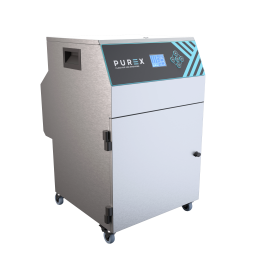
The 400 is a versatile machine for use within the Electronics industries due to its small footprint and powerful air flow abilities.
View product -
Cub3d
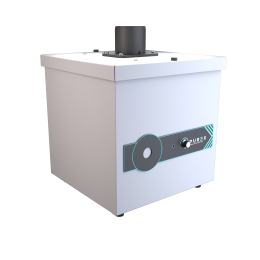
The Purex Cub3d is both a cost-effective and high-performing unit. This unit has been specifically designed to cater to the unique demands of the 3D printing industry.
View product -
 PUR35
PUR35
PUR35
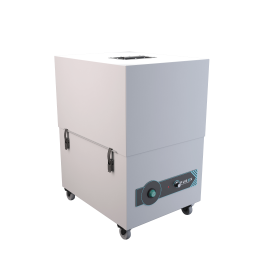
The Purex PUR35, our top-tier and economically viable solution, is equipped with a total of three filters - two primary ones and an additional pre-filter. Its design emphasizes portability and ease of installation, thanks to its compact dimensions. This makes the PUR35 an ideal choice for those seeking a flexible and efficient filtration solution.
View product
Get in Touch
Looking for a fume extractor for your printing applications? Fill out the form below to speak to a member of our team and find the best clean air solution for your business.
-
Unit A, Saltgrounds Road,
Brough, East Riding of Yorkshire,
United Kingdom,
HU15 1EG - +44 (0) 1405 746030
- purex@purex.co.uk
Printing FAQs
When selecting a fume extraction unit for your printing processes, some key factors to consider are:
- Airflow requirements (m³/h), based on the size of your space and the intensity of fume generation.
- The type of contaminants produced (e.g., ozone, VOCs, MEK) and corresponding filter/media compatibility.
- Space constraints and capture methods required.
If you need support selecting the most suitable fume extractor for your printing process, enquire with one of our professionals today.
Yes, we offer fume extraction systems designed to withstand high-heat processes like DTF printing, allowing effective extraction despite the extreme temperatures.
By extracting airborne particulates and VOCs, the risk of contaminants settling on and disrupting the ink is significantly reduced. In turn, production quality and productivity are simultaneously improved.